How to Support Your Child With Careers

Instead of yes/no questions, try things like:
These help your child explore their interests and values.
Help them see how what they’re learning connects to careers:
Share your own career path — including changes and challenges.
It helps them see that careers aren’t always straightforward and that it’s okay to change direction.
Look up job profiles, college courses, or apprenticeships on websites like National Careers Service or UCAS.
Doing this together makes it feel less like pressure and more like teamwork.
Remind them it’s okay not to have all the answers yet.
Ask things like:
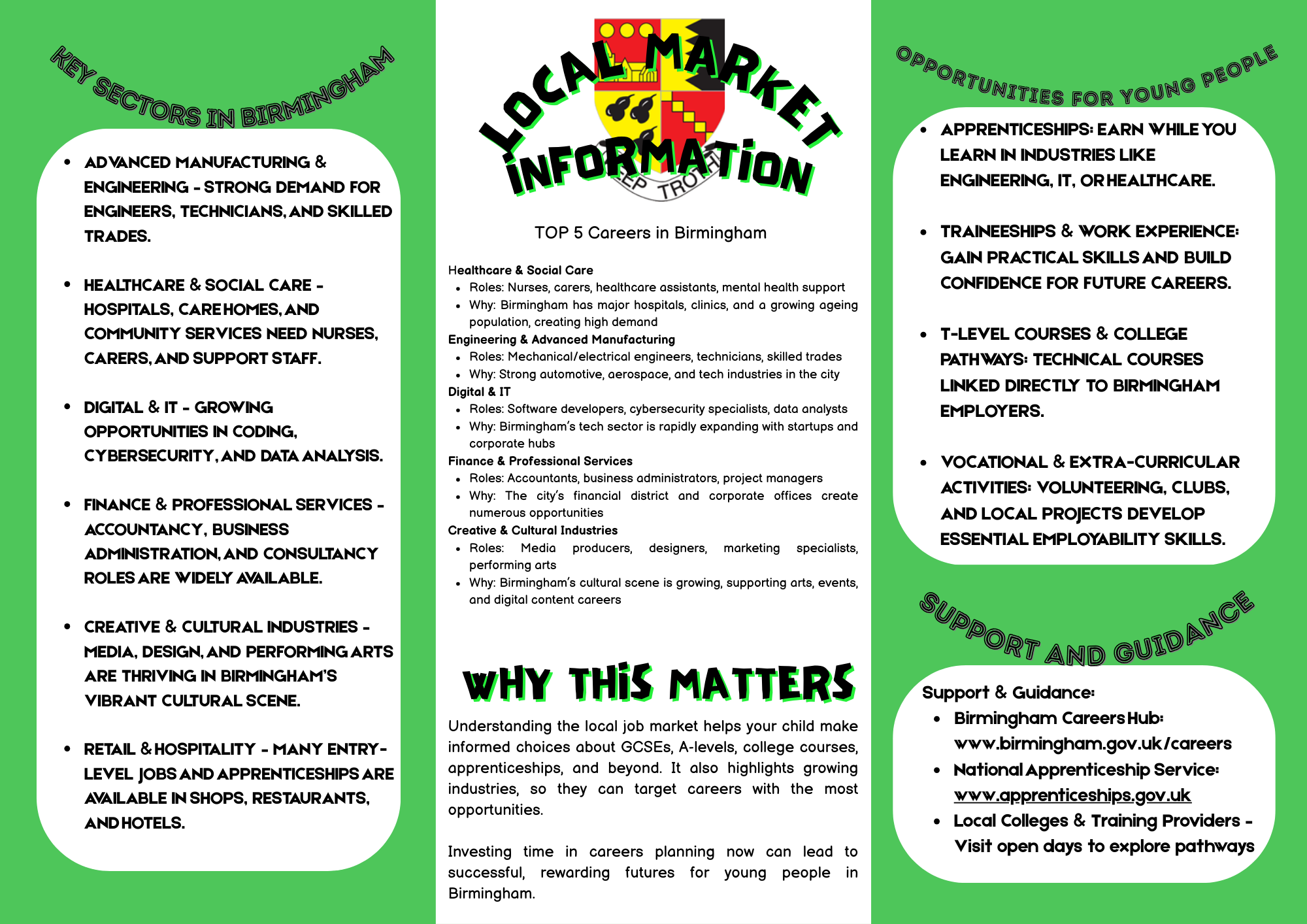
Not true! Most people try out several jobs before finding the right one. Year 11 is about exploring options, not deciding for life.
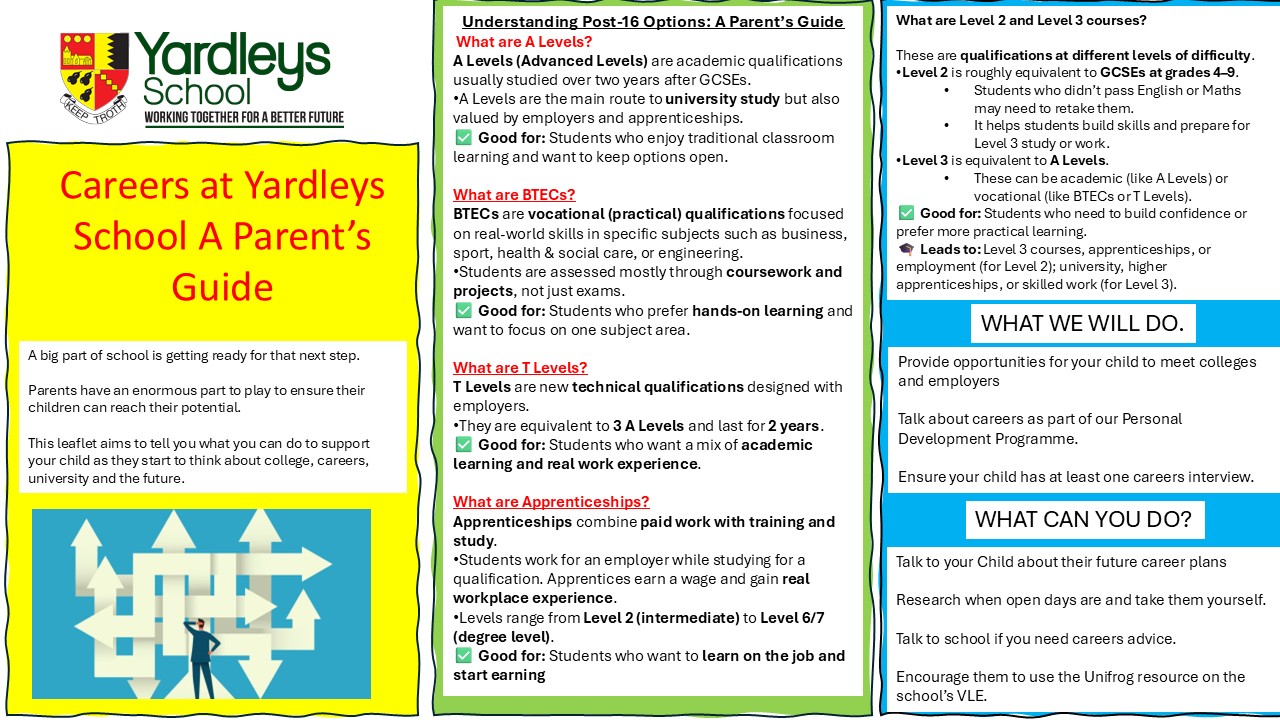
There are many routes — apprenticeships, college courses, T Levels, and vocational training can all lead to great careers.
Enjoyment, kills, and work–life balance matter just as much. A well-paid job can still feel wrong if it doesn’t suit you.
Every career is open to everyone. Skills and interests should guide choices, not gender stereotypes.
Many adults change jobs or even industries several times. Skills are transferable, and lifelong learning keeps doors open.
https://www.bbc.co.uk/bitesize/careers
https://www.careerpilot.org.uk/parent-zone
https://www.ucas.com/further-education/post-16-options/getting-started
https://nationalcareers.service.gov.uk/
https://apprenticeships.co.uk/student-home
Unifrog is our web based resource for students to explore their options when they leave Yardleys. Unifrog is an online “universal destinations” platform that helps students explore careers, apprenticeships, further education and university courses in one place. It includes tools to record activities and skills, compare opportunities (e.g., courses, apprenticeships) and build strong application documents (CVs, personal statements).
All student have a log for Unifrog and if they do not remember their password then they can easily reset their password through the website.